


1. FREELANCING
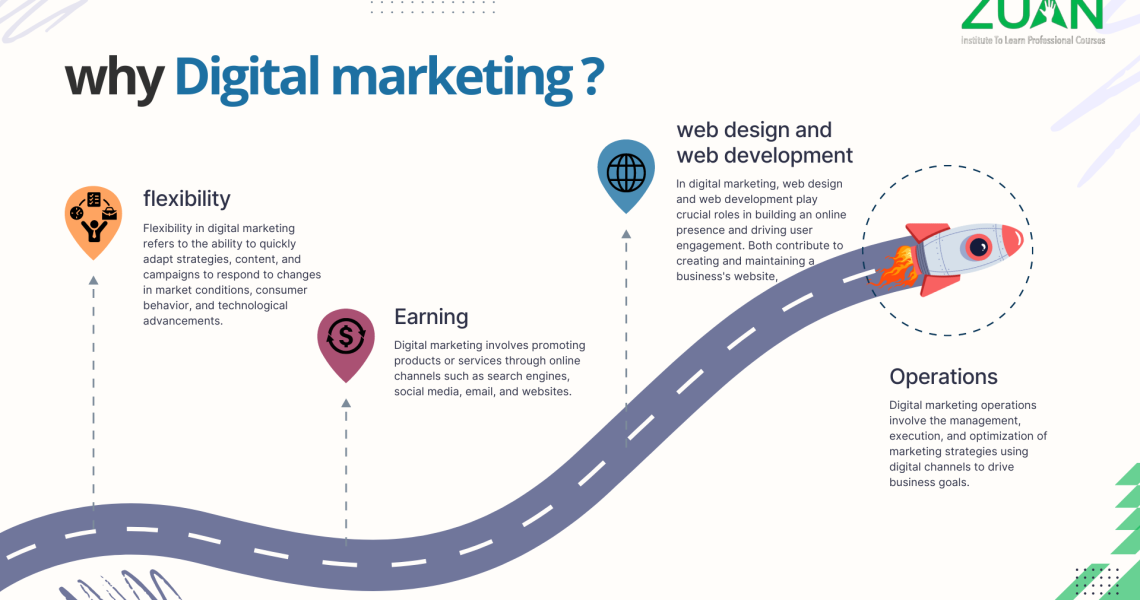
Flexibility:
Freelancing offers flexibility by allowing you to set your work hours, choose your projects, and work from anywhere. This freedom helps you balance work with your personal life and adapt to changing needs and interests.
Earning:
a) Tools:
SEO Tools: Ahrefs, SEMrush, Ubersuggest, Google Keyword Planner, Moz, BuzzSumo
Content Creation Tools: Canva, Adobe Creative Cloud
Social Media Management: Hootsuite, Buffer
Analytics Tools: Google Analytics, Google Data Studio
Email Marketing: Mailchimp, Sendinblue
Freelance Platforms: Upwork, Fiverr, Freelancer
CMS: WordPress, Blogger
b) Projects:
Earn by offering SEO, content creation, and social media management services. Monetize content through ads, affiliate marketing, or selling digital products. You can also generate leads for products, sell courses, or offer consulting services in digital marketing.
c) Ads:
Make money by creating, managing, and optimizing ad campaigns for clients on platforms like Google Ads, Facebook Ads, or LinkedIn Ads. Charge for expertise in driving traffic and conversions.
d) Content Marketing:
Generate income by offering content creation, crafting a content strategy, implementing SEO optimization, managing social media, and providing analytics and reporting to track and refine strategies.
e) Online Tutoring/Teaching: Earn by offering one-on-one sessions or group classes, creating courses, providing homework help, and hosting skill workshops.
Web Design and Development: Make money by offering custom website design and website development to build unique and functional sites. Provide website maintenance for ongoing support and develop e-commerce solutions to optimize online stores with payment integration and product management.
2.GENERIC REVENUE
What is Digital Marketing?
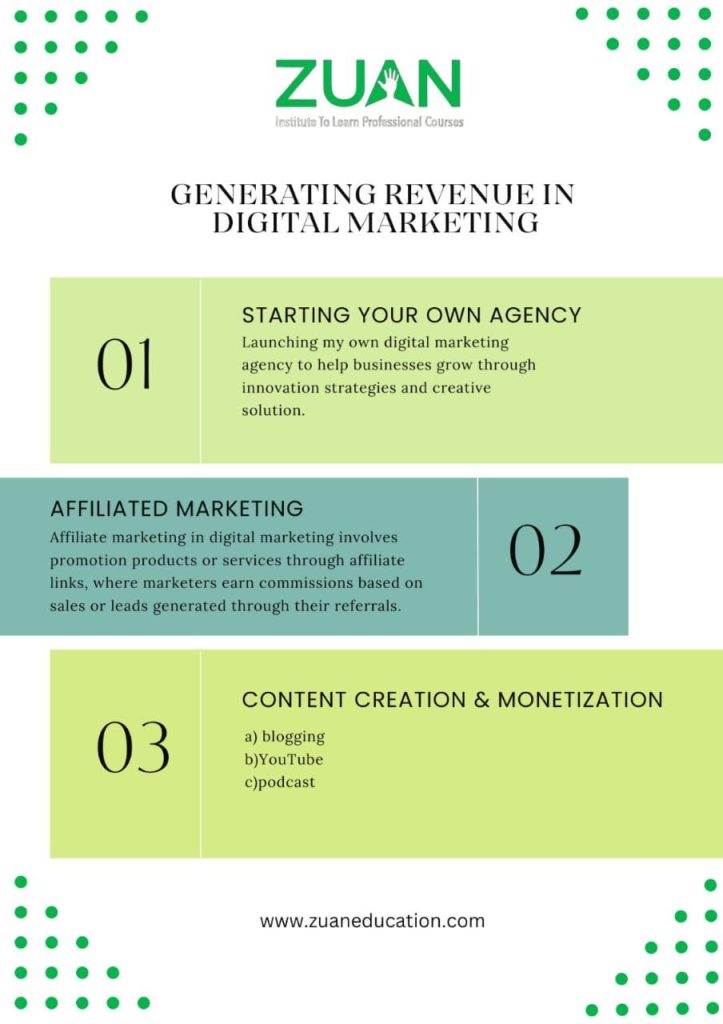
Starting your own agency:
To start your agency, first develop expertise in digital marketing and identify your niche. Create a business plan outlining services and goals. Build your brand, acquire clients through your network, and as you grow, scale by expanding services and hiring a team.
Affiliate Marketing:
Affiliate marketing lets you earn by sharing products or services through referral links. Benefits include low start-up costs, flexibility, and potential for passive income. To succeed, choose a niche, join affiliate programs, create quality content, and overcome challenges like competition and income dependence.
Content Creation and Monetization:
Content creation and monetization involve producing valuable content that generates revenue. By consistently creating high-quality content and using methods like advertising, affiliate marketing, sponsored content, and selling digital products, you can monetize your audience effectively.
a) Blog:
For a successful blog, choose a resonant topic, create an outline, and optimize for SEO before publishing. Monetize through affiliate marketing, advertising, sponsored posts, and selling digital products.
b) YouTube:
To publish a video on YouTube, create a channel, record and edit your video, and upload it with a detailed title, description, and tags. Monetize through the YouTube Partner Program (YPP), ads, affiliate marketing, memberships, Super Chat, YouTube Premium revenue, and sponsored content.
c) Podcast:
Earn from a podcast by securing sponsorships, engaging in affiliate marketing, and receiving donations via crowdfunding. Additional income streams include merchandise sales, premium content, live shows, monetization through YouTube, course creation, and brand collaborations.
3. CAREER OPPORTUNITIES:
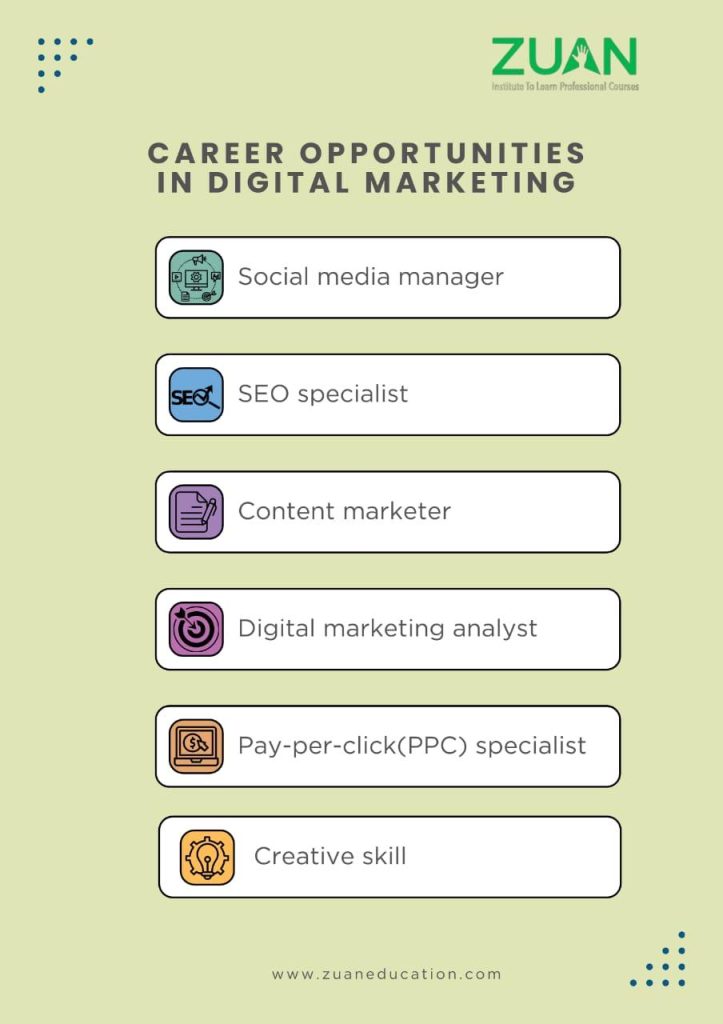
Social Media Manager:
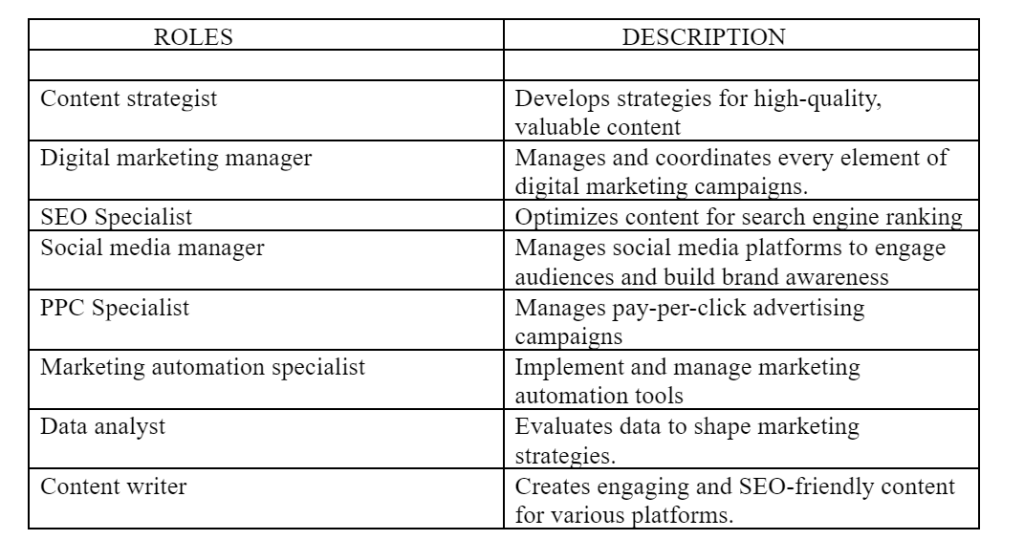
As a Social Media Manager, you develop strategy, create content, manage communities, oversee campaigns, and handle analytics and brand management. Essential skills include creativity, communication, analytical thinking, technical knowledge of social media tools, and organizational skills.
Tools and Platforms:
Social Media Platforms: Instagram, Facebook, Twitter, Pinterest, LinkedIn
Management Tools: Hootsuite, Buffer, Sprout Social, Later
Analytics Tools: Google Analytics, Facebook Insights, Twitter Analytics, Instagram Insights
Design Tools: Canva, Adobe Creative Suite
SEO Specialist
An SEO Specialist improves website visibility in search engines through keyword research, on-page optimization, and building quality backlinks. They analyze performance data, monitor algorithm updates, and implement strategies to enhance rankings and user experience, aiming to attract more relevant visitors.
Content Marketer
A Content Marketer develops strategies to attract and engage a target audience, creating content like blog posts, videos, and social media updates to drive brand awareness and conversions. Essential skills include SEO knowledge, creativity, communication, and project management.
Tools:
Content Management Systems: Drupal, Joomla, WordPress
SEO Tools:Google Analytics, SEMrush, Ahrefs, Moz
Content Planning:Trello, Asana, CoSchedule
Design and Editing: Canva, Adobe Creative Suite, Grammarly
Social Media Management:Buffer, Hootsuite, Sprout Social
Research Tools:BuzzSumo, Google Trends, AnswerThePublic
Email Marketing: Mailchimp, Constant Contact, ConvertKit
Digital Marketing Analyst
A Digital Marketing Analyst evaluates digital marketing campaigns by analysing data, tracking KPIs, and generating reports. Key skills include data analysis, technical proficiency, reporting abilities, problem-solving, and communication to present data and track performances.
Tools:
Analytics Platforms: Google Analytics, Adobe Analytics
Data Visualization: Tableau, Google Data Studio, Microsoft Power BI
SEO Analysis: SEMrush, Ahrefs, Moz
PPC Management: Google Ads, Bing Ads, Facebook Ads Manager
Social Media Analytics: Facebook Insights, Twitter Analytics, Instagram Insights
Email Marketing Analytics: Mailchimp, HubSpot, Constant Contact
Survey Tools: SurveyMonkey, Typeform
Pay-Per-Click (PPC) Specialist
As a PPC Specialist, you manage campaigns, focusing on keyword research and ad copywriting to drive clicks and conversions. Effective budget management, data analysis, and A/B testing are crucial for optimizing performance. Understanding PPC metrics like CTR and CPC is key to maximizing ROI.
Tools:
Google Ads:Manages search and display ad campaigns, tracks performance, and optimizes bids.
Bing Ads: Provides tools for managing PPC campaigns on Bing.
Facebook Ads Manager: Manages paid social media campaigns on Facebook and Instagram.
Google Analytics: Tracks and analyzes traffic and conversions from PPC campaigns.
SEMrush: Offers tools for keyword research and ad performance tracking.
Ahrefs: Provides keyword research and competitor insights.
SpyFu: Analyzes competitors’ PPC strategies.
WordStream: Offers tools for PPC management across platforms.
Creative Skills
a) Copywriting:
Craft engaging and persuasive text for ads, social media, websites, and other marketing materials. Effective copywriting captures attention, communicates messages, and drives audience action.
Tools: Grammarly for editing, Hemingway Editor for readability.
b) Design:
Create visual elements like graphics and layouts for digital and print media. Good design enhances brand identity and makes content visually appealing.
Tools: Adobe Creative Suite for advanced design, Canva for user-friendly graphic design.
c) Video Editing: Edit video footage to produce engaging, polished content for YouTube, social media, and websites. High-quality video editing enhances storytelling and viewer engagement.
Tools: Adobe Premiere Pro for professional editing, Final Cut Pro for advanced Mac users, iMovie for basic editing.
4. PERSONAL BRANDING:
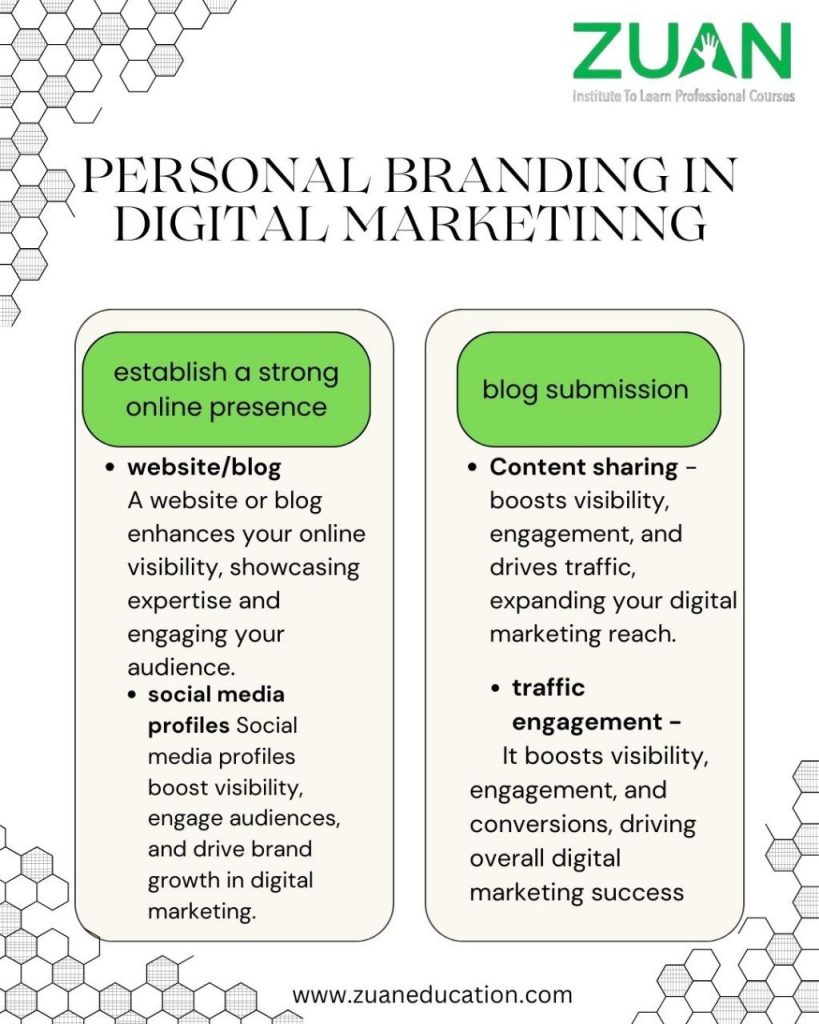
Establish a strong online presence
Content serves as the backbone of your personal brand’s online presence, driving engagement and visibility across platforms.
a) Website/Blog:
Create high-quality content that showcases your expertise. This improves SEO and visibility by boosting search engine rankings. A well-designed website or blog leaves a strong, positive impression on visitors, enhancing your professional presentation.
b) Social Media Profile:
Your social media profiles are vital for expanding brand engagement and reach. By maintaining consistent messaging across all platforms, you reinforce your personal brand and create a cohesive online presence. This helps build a community of followers who resonate with your content, leading to stronger connections and increased influence in your industry.
Blog Submission
Blog submission involves submitting your blog content to various platforms, directories, and websites to increase visibility, drive traffic, and improve SEO rankings. This strategy helps you reach a wider audience and enhance your blog’s online presence.
a) Content Sharing:
To boost traffic, start by optimizing for SEO, engaging in content marketing, and amplifying your reach through social media and email marketing. Supplement these efforts with paid advertising, content syndication, and referral traffic strategies. Continuously refine your approach through analytics and monitoring.
b) Traffic Enhancement:
Enhance traffic by focusing on SEO optimization, content marketing, and expanding your reach via social media and email marketing. Use paid ads, content syndication, and referral traffic strategies, and regularly improve your tactics with analytics.
5. FUTURE OF DIGITAL MARKETING:
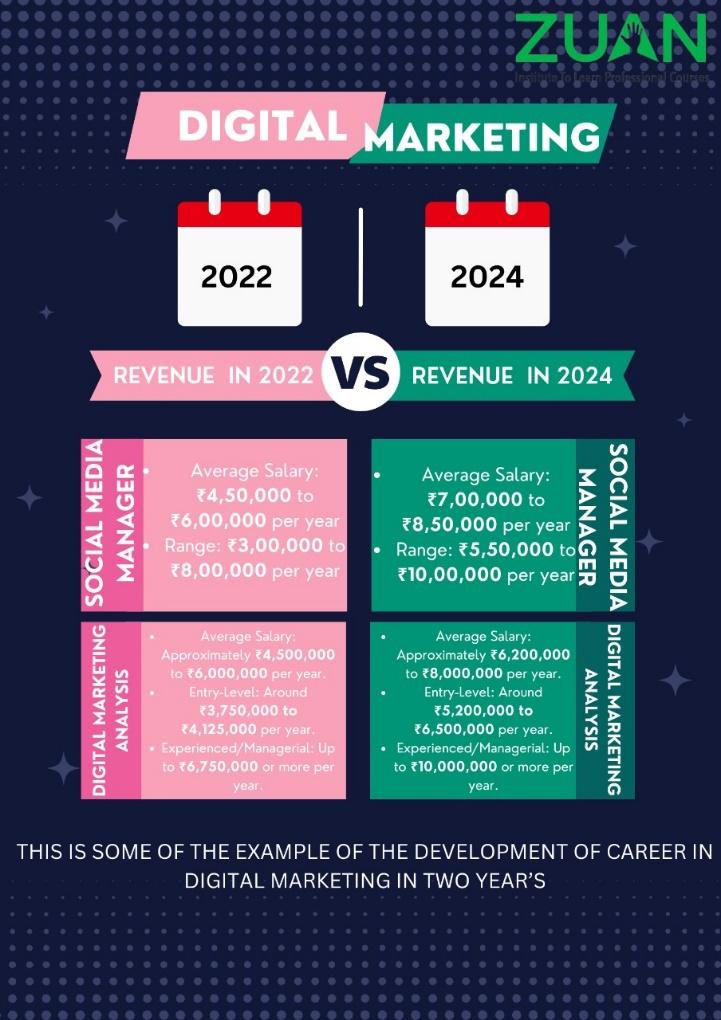
Important of digital marketing:
Digital marketing will be increasingly vital as businesses and consumers shift online, requiring companies to leverage it to reach and engage audiences effectively. Advances in AI and data analytics will revolutionize digital marketing by enabling personalized customer experiences, optimizing strategies, and driving superior results.
Comparison with future:
6. ENTREPRENEURSHIP & DEVELOPMENT:
Scaling your digital marketing business:
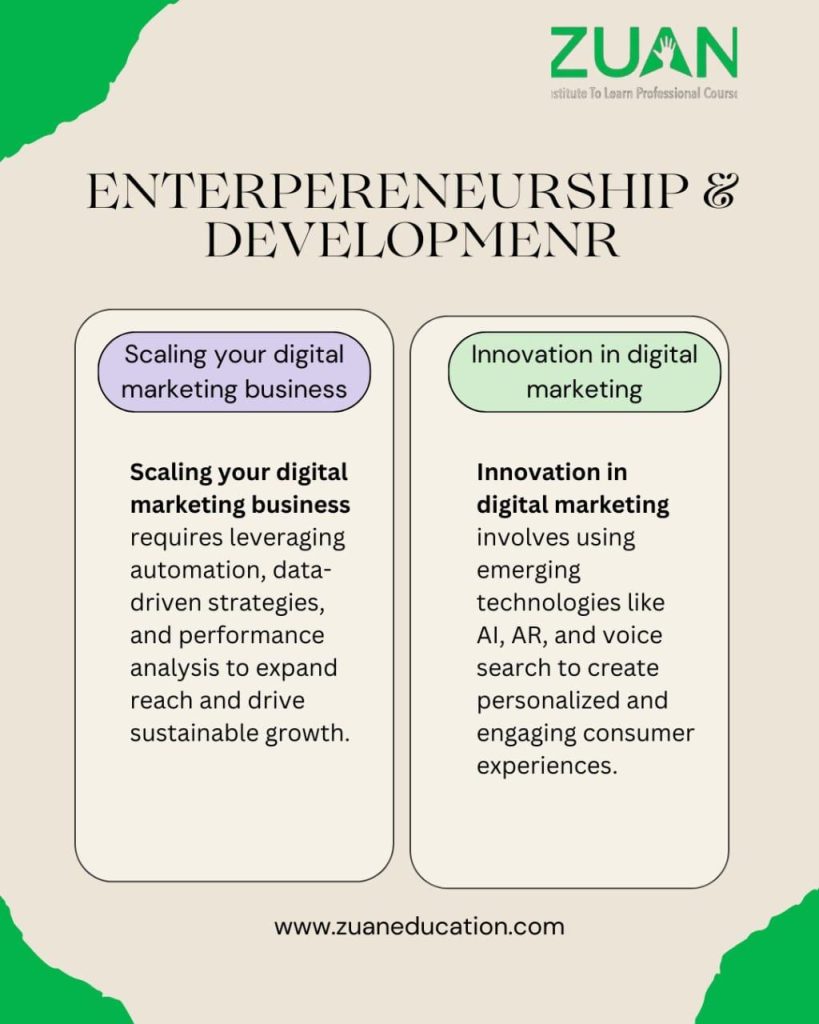
To successfully scale your digital marketing business, expand service offerings, build a strong team, and automate processes for efficiency. Focus on client acquisition, retention, financial management, and leveraging technology to reach new markets and increase revenue.
Innovation in Digital Marketing
Innovations in digital marketing include AI, Machine Learning, chatbots, AR and VR, voice search optimization, and programmatic advertising. These advancements enhance personalization, transparency, targeting, and overall user experience, reshaping the digital marketing landscape.

